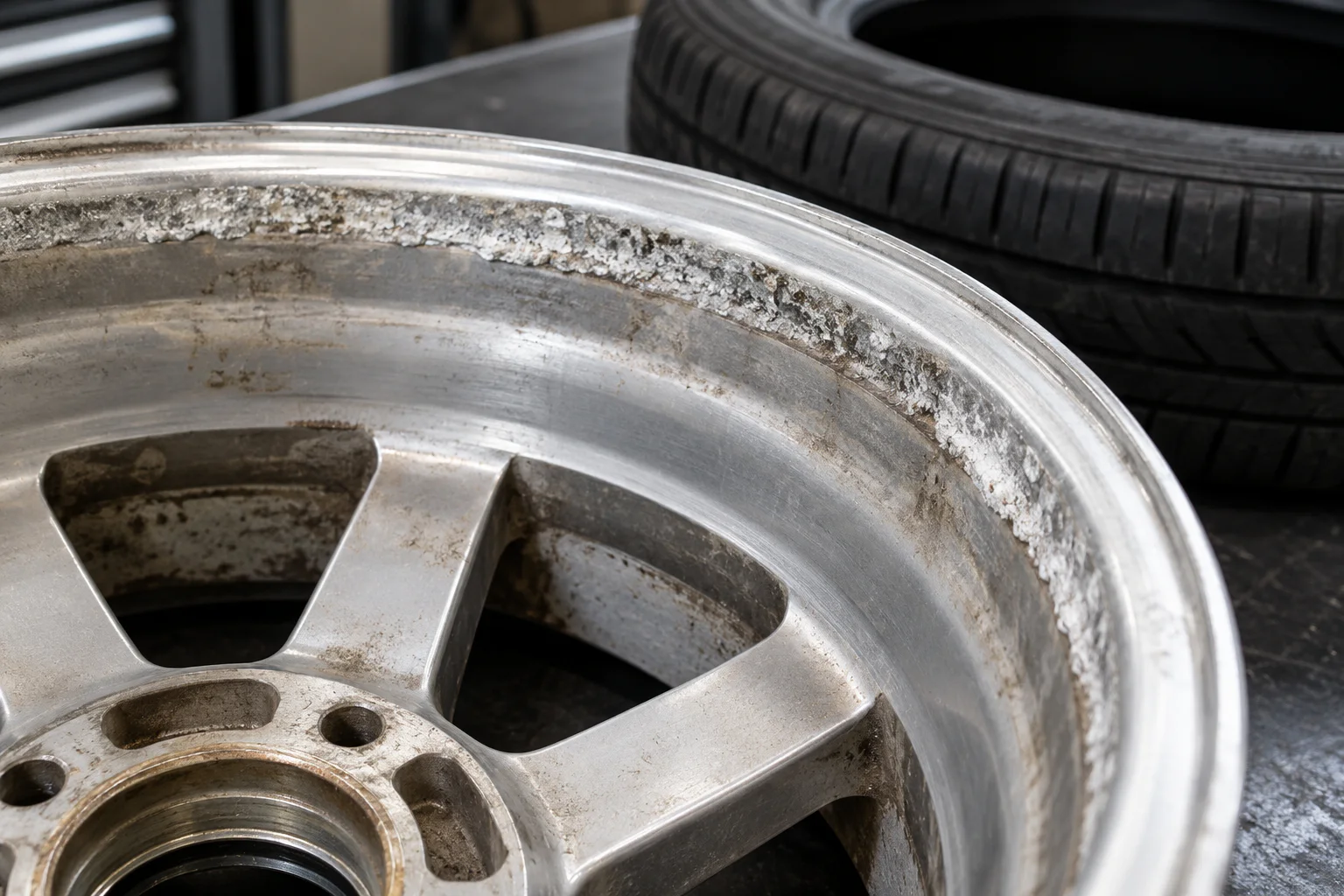
A tubeless tire seals where its bead contacts the wheel. Corrosion or a blistered wheel finish can make that surface rough and allow gradual air loss. A technician must locate the leak because punctures, valves, wheel damage and wheel porosity can produce similar symptoms. Adding air repeatedly does not correct the underlying cause.
01 · TIRE REPAIR
The tire bead needs a sound sealing surface
The wheel's bead-seat area supports the tire bead and helps create the air seal. Corrosion can lift or blister the wheel finish and create an uneven surface that is difficult for the tire to seal against.
Ottawa and Gatineau vehicles encounter moisture, winter road treatments and repeated temperature changes. These conditions make regular wheel and pressure inspection especially useful, although corrosion severity varies by wheel, finish, age and maintenance.
02 · TIRE REPAIR
Slow air loss has several possible causes
A nail or screw, leaking valve, damaged tire, bent or cracked wheel, bead-seat corrosion and wheel porosity can all cause pressure loss. More than one issue may be present.
A useful diagnosis identifies the actual leak location before a repair is selected. If the tire has been driven while severely underinflated, its internal condition must also be evaluated.
03 · TIRE REPAIR
Signs that need an inspection
A tire that needs air every few days or weeks has a problem even if it looks normal. Other clues include one tire consistently reading lower than the others, a recurring TPMS light, visible oxidation near the rim edge, or leakage that returns after seasonal installation.
Do not continue driving on a visibly flat tire. If pressure falls quickly, the wheel is damaged or the sidewall shows a bulge or cut, stop in a safe place and arrange professional assistance.
- Recurring low-pressure warning
- One tire repeatedly losing pressure
- Visible wheel corrosion or finish blistering
- Leakage after a seasonal change
- Bent, cracked or impact-damaged wheel
04 · TIRE REPAIR
Repair depends on the wheel and the damage
Some manufacturer procedures allow limited correction of certain bead-seat corrosion. Other wheels require refinishing or replacement, and cracks or structural damage need a different decision. The correct remedy depends on the wheel material, corrosion extent and vehicle-manufacturer guidance.
After service, continue monitoring cold tire pressure. A repaired sealing surface does not prevent an unrelated puncture or valve leak from developing later.
KEEP THIS HANDY
Quick checklist
- Record how quickly the pressure drops
- Check pressure when the tire is cold
- Inspect the valve and visible tread
- Mention any pothole or curb impact
- Have the bead seat and wheel condition evaluated
- Replace structurally damaged wheels when required
Sources and further reading
Specifications and regulations can change. Follow the current vehicle, tire-manufacturer and government guidance for your situation.