
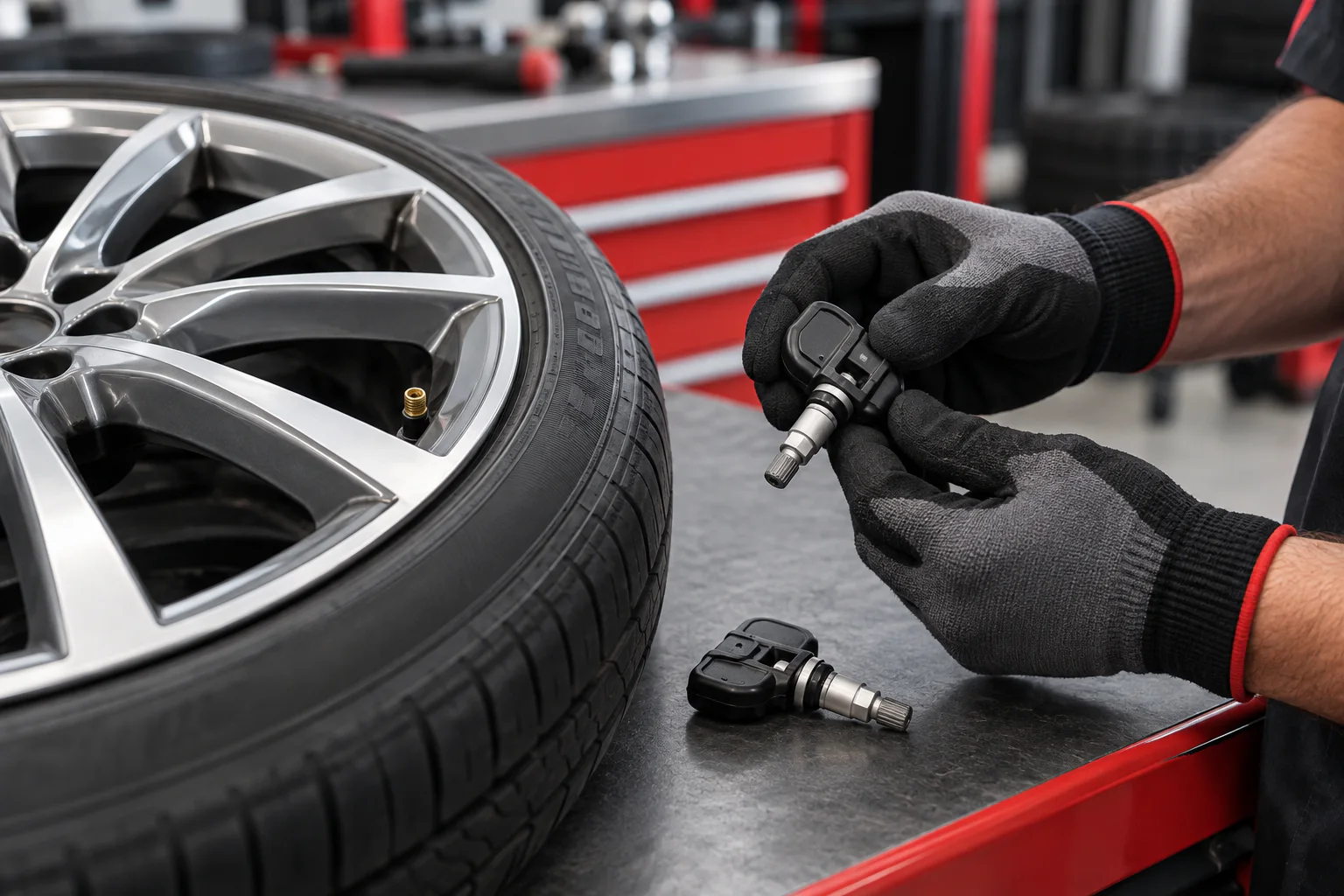
A tire-pressure monitoring system alerts the driver when tire pressure is too low or when the monitoring system has a fault. Direct systems use pressure sensors at the wheels, while indirect systems compare wheel-speed information. Seasonal wheels need to be compatible with the vehicle's system, and some vehicles require sensor programming or a relearn after wheels are changed or rotated.
01 · TIRE TECHNOLOGY
Direct and indirect TPMS work differently
Transport Canada describes two common approaches. A direct system measures pressure through wheel-mounted sensors. An indirect system uses wheel-speed information, often through the anti-lock braking system, to identify a tire that behaves differently because it is underinflated.
The owner's manual explains which system the vehicle uses, how warnings appear and whether a driver reset or service procedure is required.
02 · TIRE TECHNOLOGY
Winter wheels may need compatible sensors
A second wheel set without the correct sensors can leave some direct systems unable to monitor pressure. The sensor must be compatible with the vehicle and physically suitable for the wheel.
Depending on the vehicle, seasonal sensors may be recognized automatically, require a relearn, or need programming equipment. Ask before buying wheels or sensors rather than assuming that every sensor works with every vehicle.
03 · TIRE TECHNOLOGY
Know the difference between a low-pressure warning and a fault
A steady warning commonly indicates that at least one tire is underinflated. A warning that flashes for roughly a minute and then remains on can indicate a system malfunction on many vehicles. Indicator behaviour varies, so check the owner's manual.
Never dismiss the light immediately after a changeover. Check all four tires with an accurate gauge and use the vehicle manufacturer's recommended cold pressures.
04 · TIRE TECHNOLOGY
TPMS is a warning system, not a maintenance substitute
Transport Canada warns that some systems alert only after pressure has fallen significantly. Continue checking tire pressure regularly and before longer trips.
Inspect the tires for damage or recurring loss as well. A sensor cannot determine whether a puncture, valve, wheel condition or another issue caused the pressure change.
KEEP THIS HANDY
Quick checklist
- Read the TPMS section of the owner's manual
- Confirm sensor compatibility before buying winter wheels
- Check pressure with an accurate gauge
- Use the vehicle's recommended cold pressure
- Arrange a relearn or programming when required
- Investigate repeated warnings or pressure loss
Sources and further reading
Specifications and regulations can change. Follow the current vehicle, tire-manufacturer and government guidance for your situation.