
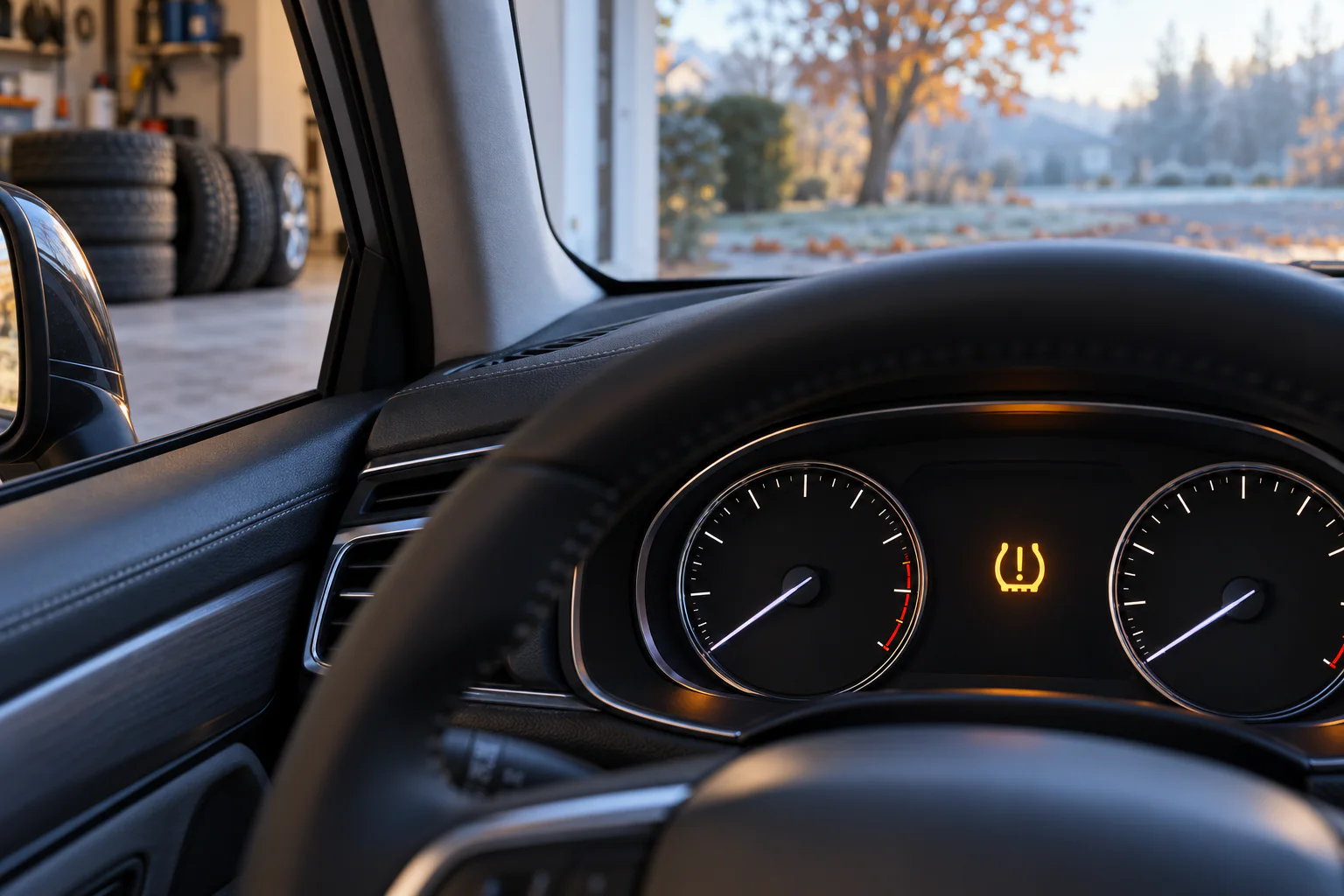
After a seasonal tire change, a TPMS light may indicate genuinely low pressure, colder outdoor temperatures, sensors that need to be relearned, incompatible or missing sensors, or a system fault. Check every tire with an accurate gauge and follow the vehicle's owner's manual. A flashing light that later stays on often indicates a malfunction rather than ordinary low pressure.
01 · TIRE TECHNOLOGY
Start by checking actual tire pressure
Do not assume the warning is only a sensor issue. Measure all tires when cold and compare the readings with the vehicle's tire-information placard or owner's manual.
Outside temperature can lower pressure enough to trigger a warning. Transport Canada notes that significant temperature changes can bring on the low-pressure light, particularly when a tire was already close to the warning threshold.
02 · TIRE TECHNOLOGY
The vehicle may need to recognize the seasonal sensors
Some direct TPMS systems need a relearn after wheel positions change or a different seasonal set is installed. Others recognize stored sensors automatically after driving. Procedures differ significantly by vehicle.
If the winter wheels do not contain compatible sensors, the system may display a fault for the entire season. Confirm sensor compatibility and programming requirements before assuming the light can simply be reset.
03 · TIRE TECHNOLOGY
Steady and flashing warnings can mean different things
A steady light commonly means that one or more tires are below the monitoring threshold. Many vehicles signal a malfunction by flashing the TPMS symbol for about a minute and then leaving it illuminated.
Use the owner's manual for the exact indicator behaviour. If the pressure is correct but the warning remains, arrange system diagnosis rather than ignoring it.
04 · TIRE TECHNOLOGY
Repeated pressure loss needs investigation
If one tire repeatedly drops, the cause may be a puncture, valve leak, wheel leak or tire damage. TPMS reports the result; it does not identify or repair the source.
Check pressure monthly even when the warning light is off. Monitoring thresholds are not a substitute for maintaining the recommended cold pressure.
KEEP THIS HANDY
Quick checklist
- Check all tires cold with an accurate gauge
- Use the placard pressure, not a guessed value
- Review the owner's manual reset or relearn instructions
- Confirm that seasonal wheels contain compatible sensors
- Seek diagnosis for a flashing warning
- Investigate any tire that repeatedly loses air
Sources and further reading
Specifications and regulations can change. Follow the current vehicle, tire-manufacturer and government guidance for your situation.