
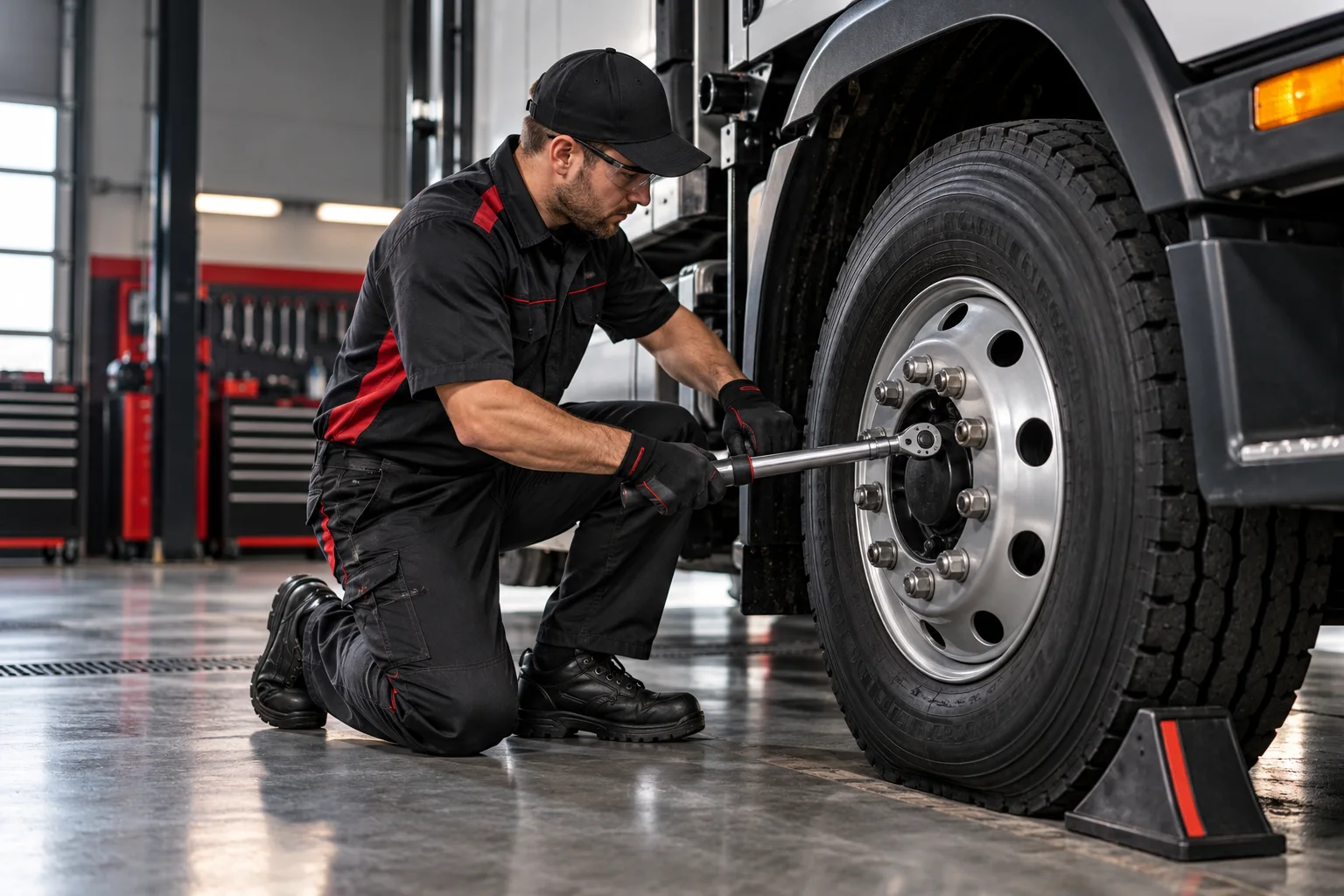
There is no universal torque number for every medium-truck wheel. The correct specification depends on the vehicle, wheel and hub, mounting system, stud and nut type, thread size, hardware condition and the manufacturer's lubrication instructions. Identify the complete assembly first, then use the current vehicle, axle, hub or wheel manufacturer's procedure with calibrated equipment.
01 · COMMERCIAL WHEEL SAFETY
Why a torque chart is a reference, not a universal answer
A torque chart can help a trained technician narrow the specification after the wheel system and fasteners have been identified. It cannot safely replace the vehicle or component manufacturer's instructions. Two trucks with similar wheel diameters may use different studs, nuts, mounting systems or procedures.
The specification also assumes the parts are compatible and in serviceable condition. Corrosion, paint buildup, dirt, damaged threads, stretched studs, worn nuts or incorrect contact surfaces can change clamping force even when a wrench displays the expected value.
02 · COMMERCIAL WHEEL SAFETY
What must be identified before selecting a torque value
Start with the truck year, make, model and axle, then identify the wheel material and mounting system. Confirm whether the assembly is hub-piloted or stud-piloted, the stud diameter and thread pitch, the nut style and whether the manufacturer specifies dry or lubricated threads.
Never assume that a number for one fastener applies to another. Even within medium-duty applications, torque specifications vary substantially. When the vehicle, wheel, hub and fastener documents disagree or the hardware cannot be positively identified, stop and obtain the correct manufacturer information before installation.
03 · COMMERCIAL WHEEL SAFETY
Clean contact surfaces and correct lubrication matter
Torque is used to create clamping force, but friction consumes part of the applied torque. Paint, rust, debris, damaged threads and unintended lubricant can therefore change the relationship between wrench reading and actual clamp load.
Follow the manufacturer's preparation and lubrication instructions exactly. Do not apply lubricant to nut seats, wheel contact surfaces or other areas unless the applicable procedure calls for it. Parts that are cracked, distorted, heavily corroded or otherwise damaged require replacement rather than extra torque.
04 · COMMERCIAL WHEEL SAFETY
Use the specified tightening sequence and calibrated tools
Seat the wheel correctly and tighten the fasteners in the sequence specified for that wheel system, normally using progressive steps rather than jumping directly to final torque. Final tightening should be completed with a calibrated torque wrench or an approved controlled-torque system.
An impact wrench can speed removal and initial snugging when the procedure permits, but its sound or elapsed trigger time is not a torque measurement. Tool calibration, the correct socket and a stable working position are part of a repeatable installation.
05 · COMMERCIAL WHEEL SAFETY
Schedule the 80-160 km wheel-fastener recheck
Ontario's MTO Truck Handbook says wheel manufacturers recommend rechecking commercial wheel fasteners between 80 and 160 km after installation. Arrange the recheck whenever a wheel has been installed or removed, including after tire, brake or hub service.
Record the installation odometer, the required recheck window and the completed inspection. Drivers should also watch for missing or loose fasteners, rust trails, shiny movement marks, cracks, gaps or vibration and report defects immediately.
KEEP THIS HANDY
Quick checklist
- Identify the vehicle, axle and wheel position
- Confirm hub-piloted or stud-piloted mounting
- Verify stud thread and nut type
- Use the current manufacturer specification
- Prepare contact surfaces as specified
- Follow the correct tightening sequence
- Use calibrated torque equipment
- Schedule and document the 80-160 km recheck
Sources and further reading
Specifications and regulations can change. Follow the current vehicle, tire-manufacturer and government guidance for your situation.