
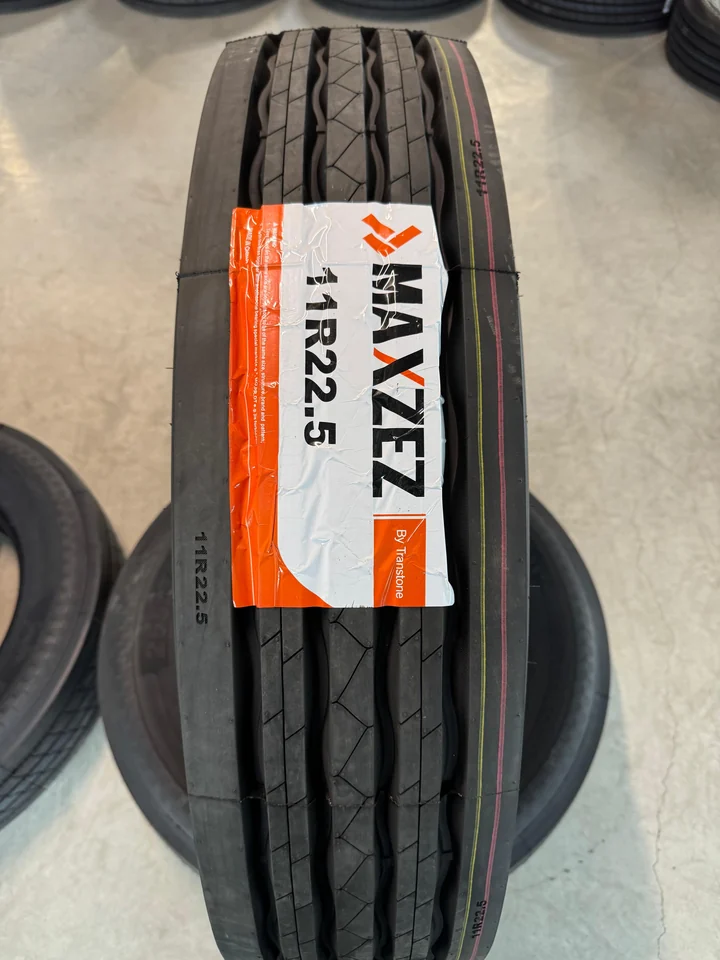
A code such as P205/55R16 89V describes the tire type, width, sidewall proportion, radial construction, wheel diameter, load index and speed rating. A commercial size such as 11R22.5 uses a different format. Always match the complete specification—not only the wheel diameter.
01 · TIRE BASICS
Reading a passenger tire code
Using P205/55R16 89V as an example, P identifies a passenger tire, 205 is the nominal section width in millimetres, 55 is the sidewall height as a percentage of the width, R means radial construction, and 16 is the wheel diameter in inches.
The final service description matters too. In this example, 89 is the load index and V is the speed symbol. Two tires with the same basic size can carry different service descriptions, so the size alone does not confirm a correct replacement.
- 205: nominal width in millimetres
- 55: aspect ratio
- R: radial construction
- 16: wheel diameter in inches
- 89V: load index and speed symbol
02 · TIRE BASICS
Reading common commercial sizes
Commercial truck sizes may use an inch-based format. In 11R22.5, 11 is the nominal section width in inches, R identifies radial construction, and 22.5 is the rim diameter in inches. A metric commercial size such as 425/65R22.5 follows the width, aspect-ratio, construction and rim-diameter pattern.
The sidewall also carries load information, maximum cold-inflation markings and other service details. Those values must be evaluated with the vehicle, axle, wheel and operating load.
03 · TIRE BASICS
Where to confirm the correct size
For a passenger vehicle, start with the tire-information placard on the driver-side door or door pillar and the owner’s manual. The size currently mounted on the vehicle may not be the original specification.
For a truck or trailer, provide the full sidewall marking, axle position and application. If possible, send a clear photo. Uncle Tires can then check suitable options before confirming availability and price.
KEEP THIS HANDY
Quick checklist
- Photograph the full sidewall marking
- Check the vehicle placard or owner’s manual
- Include the load index and speed symbol
- For trucks, identify steer, drive or trailer position
- Do not substitute a size based on appearance alone
Sources and further reading
Specifications and regulations can change. Follow the current vehicle, tire-manufacturer and government guidance for your situation.