
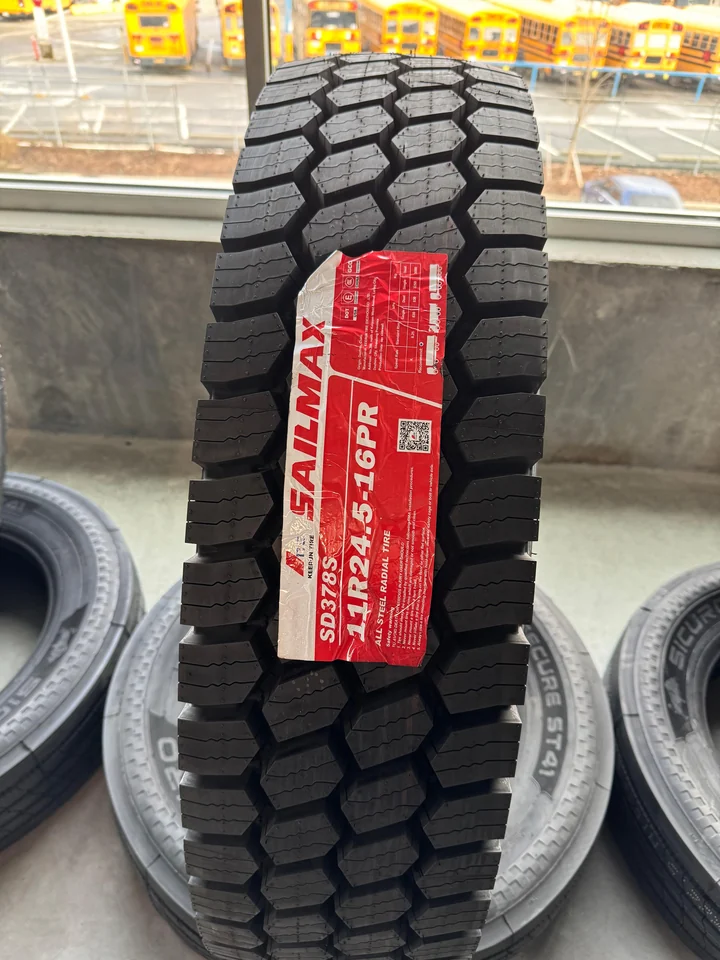
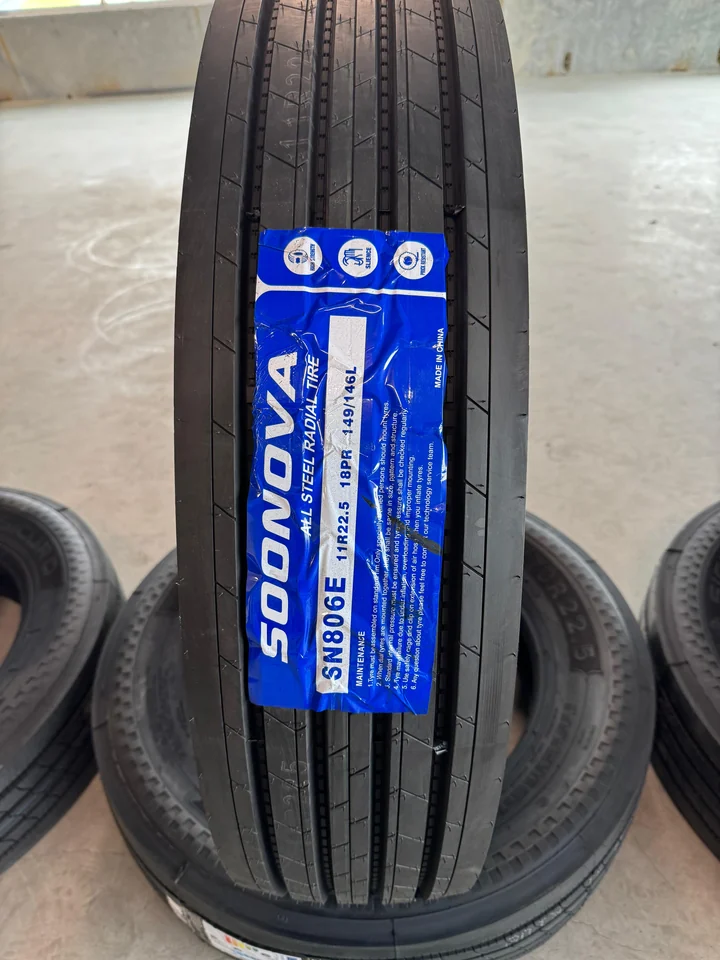
Drive tires are engineered for powered axles and commonly use block or lug patterns to transmit torque and provide traction. Trailer tires are engineered for free-rolling axles and commonly use rib patterns designed for stable tracking, even wear and resistance to trailer scrub.
The pattern is a clue, not proof of fitment. Confirm the maker’s axle designation and every required specification before mounting.
01 · POWERED AXLES
What makes a drive tire different?
Drive axles transfer engine torque to the road. Their tires need traction for acceleration, grades, wet roads and changing work conditions. This is why drive designs often have deep, independent blocks, lateral grooves and biting edges.
That pattern can improve grip, but the correct design depends on the job. A long-haul tractor, regional delivery truck and mixed-service vehicle do not place identical demands on a tire. Michelin, for example, separates commercial products by drive, trailer and all-position use, then further by operating application.
- Common visual cue: block or lug tread
- Primary job: transmit torque and maintain traction
- Selection factors: route, weather, mileage, start-stop service and retread plan
02 · FREE-ROLLING AXLES
What makes a trailer tire different?
Trailer axles are not powered, but their tires carry substantial loads and face lateral scrub during tight turns. Straight or gently shaped ribs help a trailer track consistently, encourage even wear and reduce unnecessary tread movement.
Trailer conditions still vary. Spread axles, long-haul vans, low-platform equipment and mixed-service trailers can require different constructions and tread designs. Bridgestone’s commercial application tables distinguish between recommended and merely suitable axle uses, which is why an axle label matters more than appearance alone.
- Common visual cue: continuous rib tread
- Primary job: carry load and roll with stable tracking
- Selection factors: axle configuration, scrub, route, load and rolling resistance
03 · SIDE BY SIDE
Drive tire vs. trailer tire comparison
| Factor | Drive tire | Trailer tire |
|---|---|---|
| Axle | Powered drive axle | Free-rolling trailer axle |
| Main demand | Torque and traction | Load, tracking and scrub resistance |
| Common tread | Blocks or lugs | Continuous ribs |
| Final authority | Manufacturer’s approved application plus vehicle, wheel, load and inflation requirements | |
About our catalog: Uncle Tires groups the large block patterns as Drive and the straight rib patterns as Trailer to make browsing easier. We still confirm each tire’s actual manufacturer specification and intended position before sale or installation.
Browse our truck and trailer tire catalog →04 · BEFORE YOU ORDER
Use this six-point fitment check
- 01Read the complete tire size
Examples include 11R22.5, 11R24.5 and 425/65R22.5. Similar-looking sizes are not interchangeable by appearance.
- 02Confirm the axle position
Tell the supplier whether the tire is for steer, drive or trailer service.
- 03Match load and speed requirements
Use the vehicle, axle and tire manufacturer information. Load index cannot be judged from tread design.
- 04Verify the wheel and mounting
Confirm rim diameter, width and approved mounting configuration.
- 05Set pressure for the actual application
Commercial inflation decisions should reflect the load and the tire maker’s load-and-inflation tables—not the tread pattern.
- 06Describe how the vehicle works
Long haul, regional, urban, construction and mixed service can call for different products in the same nominal size.
05 · COMMON QUESTIONS
Questions truck owners ask
Are all block-pattern tires drive tires?
No. Deep blocks and open grooves are common on drive tires because they can support traction, but tread appearance alone does not approve a tire for an axle. Check the manufacturer’s application designation and the complete specification.
Are rib-pattern tires only for trailers?
No. Rib designs are common on free-rolling trailer axles, but steer and all-position tires may also use rib-style patterns. Use the tire maker’s stated position and application.
Can a drive tire be installed on a trailer?
Only when the tire manufacturer approves that application and the size, load capacity, speed rating, rim and operating requirements are correct. A drive-only designation should not be treated as a trailer fitment.
What information should I provide for a commercial tire quote?
Send the tire size, axle position, vehicle or trailer type, unit number, normal operating conditions and a clear sidewall photo. For dual assemblies, tell us whether you are replacing one tire or the pair.
Technical sources
This guide uses current manufacturer and industry guidance. Product availability and specifications can change; consult the current tire data book for the exact product.