
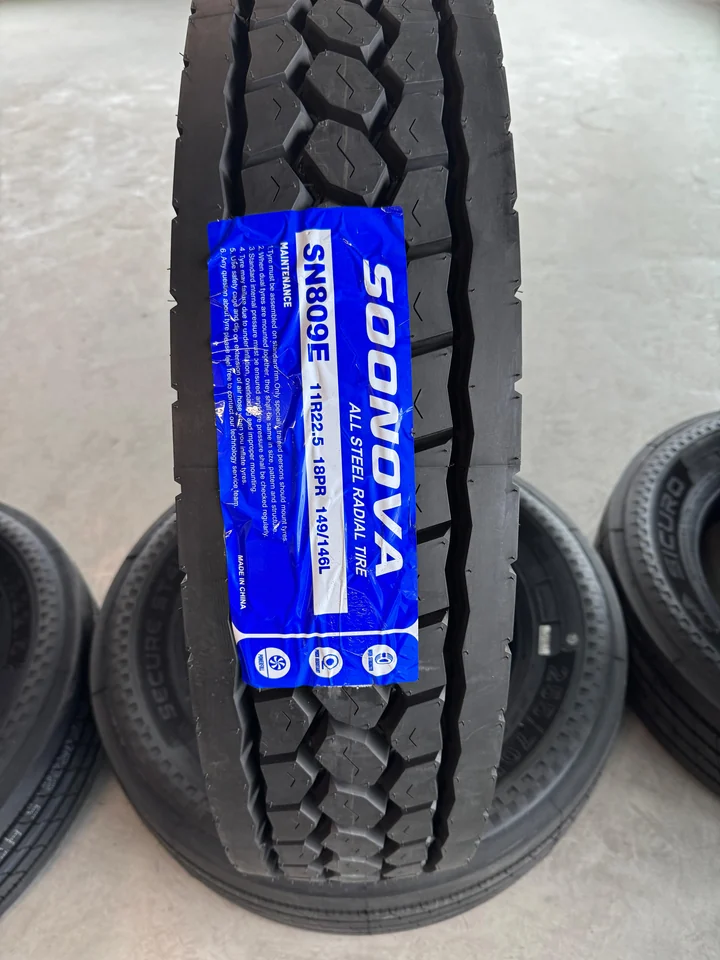
In Ontario, a front tire on a motor vehicle with a gross vehicle weight rating above 4,500 kg must retain at least 3 mm of tread. The general minimum for other tire positions is 1.5 mm. Measurements are taken in two adjacent major grooves at three equally spaced points around the tire, and legal minimums should not be treated as ideal replacement targets.
01 · ONTARIO COMMERCIAL SAFETY
The Ontario minimums by tire position
Ontario Regulation 625 sets a higher minimum for front tires on motor vehicles with a gross vehicle weight rating above 4,500 kg because those tires perform the critical steering function. They must not be worn below 3 mm in the prescribed measurement areas.
For other positions covered by the general rule, including drive tires and trailer tires, at least 1.5 mm must remain. The Ontario commercial-vehicle daily inspection test summarizes this as 3 mm for steer tires and 1.5 mm for other tires.
- Front or steer position above 4,500 kg GVWR: 3 mm minimum
- Drive and other positions under the general rule: 1.5 mm minimum
- Trailer tires: 1.5 mm minimum under the general rule
- A fleet or tire manufacturer may use a more conservative removal standard
02 · ONTARIO COMMERCIAL SAFETY
How Ontario measures commercial tread depth
The legal test is more specific than checking one convenient groove. Tread is assessed in two adjacent major grooves at three points spaced around the tire's circumference. Siping generally does not count as tread for this measurement.
If a tread design has no major grooves, measurements are made at the locations designated by the tire manufacturer. A calibrated tread-depth gauge provides a more useful reading than looking at the tire or relying on a tire thump.
03 · ONTARIO COMMERCIAL SAFETY
Tread depth is not the only pass-or-fail issue
A tire can have tread above the minimum and still be unsafe or non-compliant. Ontario prohibits exposed cord, cuts or snags deep enough to expose cord, and abnormal visible bumps, bulges or knots. A flat tire, an audible or easily felt leak, contact with another tire or vehicle component, and certain wheel defects can also be major defects during a daily inspection.
Check both sidewalls, the tread face, valve area, dual spacing and the wheel. On dual assemblies, inspect the space between the tires for trapped objects and evidence that the tires are touching.
04 · ONTARIO COMMERCIAL SAFETY
Why fleets should replace before the legal limit
A legal minimum is the point below which the tire cannot remain in service; it is not a promise of good wet, snow or slush performance. Available traction and water evacuation can decline as tread wears, particularly in Ottawa's winter and shoulder-season conditions.
Set removal targets by axle position, route, season and tire manufacturer guidance. Measure and record tread across the tire so irregular shoulder or centre wear can be corrected before it shortens casing life or creates roadside downtime.
KEEP THIS HANDY
Quick checklist
- Measure two adjacent major grooves
- Check three locations around the circumference
- Use 3 mm as the Ontario steer minimum above 4,500 kg GVWR
- Use 1.5 mm as the general minimum for other positions
- Inspect for exposed cord, cuts, bulges and leaks
- Check dual spacing and wheel condition
- Plan replacement before the legal minimum when conditions require more traction
Sources and further reading
Specifications and regulations can change. Follow the current vehicle, tire-manufacturer and government guidance for your situation.