
Case status: Active investigation. No final dumping, subsidy or injury determination has been made. This article was last reviewed on October 6, 2026 and should be updated after the next official decisions.
The Canada Border Services Agency is investigating allegations that certain truck and bus tires originating in or exported from China were dumped, subsidized or both. The Canadian International Trade Tribunal is separately examining alleged injury to Canadian producers. These are active proceedings: they do not establish that dumping occurred, that duties currently apply, or that the tires are unsafe.
01 · COMMERCIAL TIRE NEWS
What Canada is investigating
On August 31, 2026, the Canada Border Services Agency initiated dumping and subsidy investigations under the Special Import Measures Act. The investigations followed a complaint by the Canadian Retread Manufacturers Association and Michelin North America (Canada) Inc.
The complainants allege that imports from China were sold in Canada at unfair prices, benefited from subsidies, or both, and that those imports injured or threatened Canadian production. The CBSA examines dumping and subsidizing; the Canadian International Trade Tribunal examines whether the Canadian industry has suffered or is threatened with legally defined injury.
02 · COMMERCIAL TIRE NEWS
Which truck tires are within the stated scope?
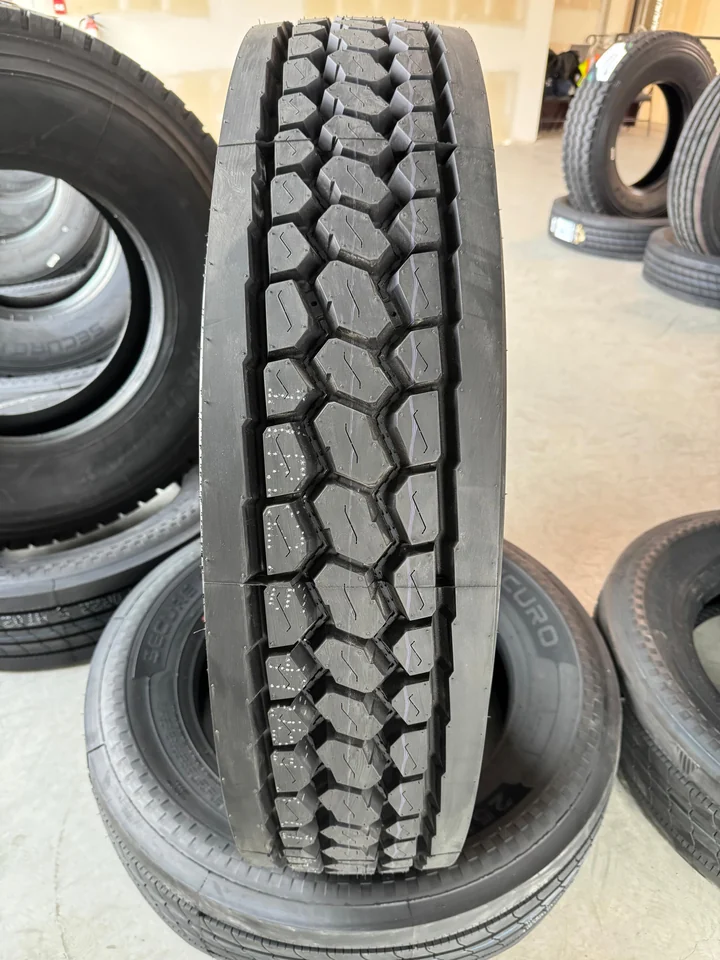
The CBSA product definition covers new and retreaded pneumatic rubber tires suitable for trucks, buses, trailers and other medium and heavy vehicles. It identifies nominal rim diameters of 17.5, 19.5, 22.5 and 24.5 inches, or the nominal metric equivalent, whether or not the tire is mounted on a wheel or rim.
The definition is broad across width, aspect ratio, load index, load range, ply rating and radial or non-radial construction. Popular commercial sizes such as 11R22.5 and 11R24.5 may fall within this description when the complete product definition and Chinese origin apply. Customs classification numbers can assist administration, but the legal product definition controls whether particular goods are subject to a case.
- New or retreaded truck and bus tires
- Medium and heavy truck applications
- Commercial trailer applications
- 17.5-, 19.5-, 22.5- and 24.5-inch nominal rim diameters
- Originating in or exported from China
03 · COMMERCIAL TIRE NEWS
What dumping and subsidizing mean
In a trade-remedy case, dumping generally concerns goods exported to Canada at prices considered lower than their normal value under Canadian law. A subsidy investigation considers whether financial contributions or other support from a foreign government conferred a benefit on the exported goods.
These proceedings concern trade pricing and injury to Canadian industry. They are not product-safety investigations, and the initiation of a case does not show that every Chinese tire, manufacturer or importer acted improperly.
04 · COMMERCIAL TIRE NEWS
An estimate is not a final duty rate
For the purpose of deciding whether to start the investigation, the CBSA estimated a dumping margin of 29.1% for the subject goods. That figure is an initiation-stage estimate based on information then available. It is not a final determination, a universal tariff or a statement about the retail price of every tire.
Exporter responses, importer information and additional evidence can change the analysis. Some exporters may ultimately receive different normal values or duty treatment, while the investigation could also be terminated if the legal tests are not met.
05 · COMMERCIAL TIRE NEWS
The next important dates
The Tribunal’s active-case schedule lists October 30, 2026 for its preliminary injury determination, with reasons scheduled for November 16. The CBSA schedule lists November 30, 2026 for preliminary determinations or termination of its dumping and subsidy investigations.
If the CBSA makes preliminary determinations and the Tribunal process continues, provisional duties may apply to subject imports. The CBSA schedule lists March 1, 2027 for final determinations or termination. A final injury inquiry would also be required before long-term trade measures could remain in force.
- October 30, 2026: CITT preliminary injury determination
- November 16, 2026: CITT reasons scheduled
- November 30, 2026: CBSA preliminary decisions or termination
- March 1, 2027: CBSA final decisions or termination, if the case continues
06 · COMMERCIAL TIRE NEWS
What this could mean for fleets and tire buyers
If provisional or final duties are imposed, landed costs and Canadian wholesale or retail pricing for affected products could change. Importers may adjust inventory, sourcing or brand selection. The extent and timing cannot be known from the initiation notice alone.
Buyers should avoid assuming that all China-made truck tires will disappear or immediately cost a fixed percentage more. Existing Canadian inventory, exporter-specific findings, customs treatment, exchange rates and supplier decisions can all affect price and availability.
07 · COMMERCIAL TIRE NEWS
How to make a practical buying decision
Continue choosing tires according to vehicle application, axle position, load, speed, route, expected mileage, casing support and total operating cost. Country of origin is useful commercial information, but it does not replace a complete fitment and product evaluation.
For a quote, ask whether pricing is current, how long it is valid, whether the product is in Canadian inventory, what warranty support applies and whether the casing has retread value. Uncle Tires will continue confirming the tire specification, application, availability and current price before an order is finalized.
KEEP THIS HANDY
Quick checklist
- Treat the case as an active investigation, not a final ruling
- Confirm whether a product meets the exact legal definition
- Ask for the tire’s country of origin
- Compare total operating cost as well as purchase price
- Verify size, load, speed and axle application
- Check warranty and casing support
- Request current pricing close to the purchase date
- Review official CBSA and CITT updates after each scheduled decision
Sources and further reading
Specifications and regulations can change. Follow the current vehicle, tire-manufacturer and government guidance for your situation.